
E-invoicing overview
Electronic invoicing (e-invoicing) is a structured, machine-readable digital document that is automatically generated and transmitted between a buyer and a seller in a standardised format. Each country's regulations differ by formats, required fields, and the platforms used for transmission.
Transaction types
Business transactions are categorised into the following three types.
- Business-to-Business (B2B): Invoicing between two legally registered businesses. This is the most common and complex transaction type.
- Business-to-Government (B2G): A business invoicing a government entity. B2G transactions are often mandated for e-invoicing first because governments seek to improve efficiency and transparency in public spending.
- Business-to-Consumer (B2C): A business invoicing a private individual or consumer. These transactions are typically high-volume and low-value. E-invoicing mandates for B2C are less common but are emerging in some countries for tax reporting.
Accounts Payable and Accounts Receivable
E-invoicing helps businesses streamline financial operations by enabling strategic management of their accounts payable (AP) and accounts receivable (AR). Within B2B commerce, an e-invoice is defined as a document that contains data from the supplier in a format that into a buyer's AP system can integrate without requiring additional data input from the buyer's AP administrator.
NoteSome government platforms don't provide the necessary infrastructure for AP invoices to be automatically retrieved by ecosio.
Formats
An e-invoice's format depends on the country's regulations, the transaction type (B2B, B2C, or B2G), and the requirements of trading partners. The following types of format are commonly used:
- UBL (Universal Business Language): The XML-based global standard for business documents like invoices. The UBL technical committee is maintained by the open-source community OASIS.
- CII (Cross Industry Invoice): Another widely used XML-based invoice format. The XML Schema artefacts for CII can be downloaded from the EU’s GitHub repository.
- Specialised and hybrid formats: Some countries use their own formats, such as a combination of a PDF with an embedded machine-readable XML file.
TipUse ecosio's XML validator to check if your e-invoices matches their intended format before sending them. Documents that are not correctly formatted can't be converted.
European e-invoicing standard
Europe's EN 16931 standard establishes common guidelines for the content and format of e-invoices, providing a minimum set of data fields to ensure interoperability. Countries can then refine the standard with a Core Invoice Usage Specification (CIUS) or expand it with an Extension.
- A CIUS refines the standard by defining which elements are mandatory or optional, providing more rules and fewer choices on data fields to ensure legal compliance and operational self-sufficiency.
- Extensions introduce new data beyond the standard's core requirements to address local or industry needs. This additional data requires mutual agreement between trading partners. Partners can ignore it if not explicitly agreed upon.
Transmission methods
E-invoice transmission methods vary by country based on priorities such as administrative simplification, tax fraud reduction, and improved operational efficiency. These methods fall into two key frameworks: post-audit and continuous transaction controls (CTCs). In each of these models, ecosio would act as the service provider.
Post-audit
Post-audit e-invoicing models enable trading partners to directly exchange invoices, and are later audited by tax authorities.
Interoperability
This model streamlines B2B transactions by making it easy for a supplier to send an e-invoice to a buyer, regardless of their software or service provider. E-invoices are exchanged in real time through certified service providers, often called Access Points. These providers agree on common formats, enabling different systems to connect and exchange invoices across an open network. Peppol, which is most commonly used by the EU, is a well-known network that follows this model.
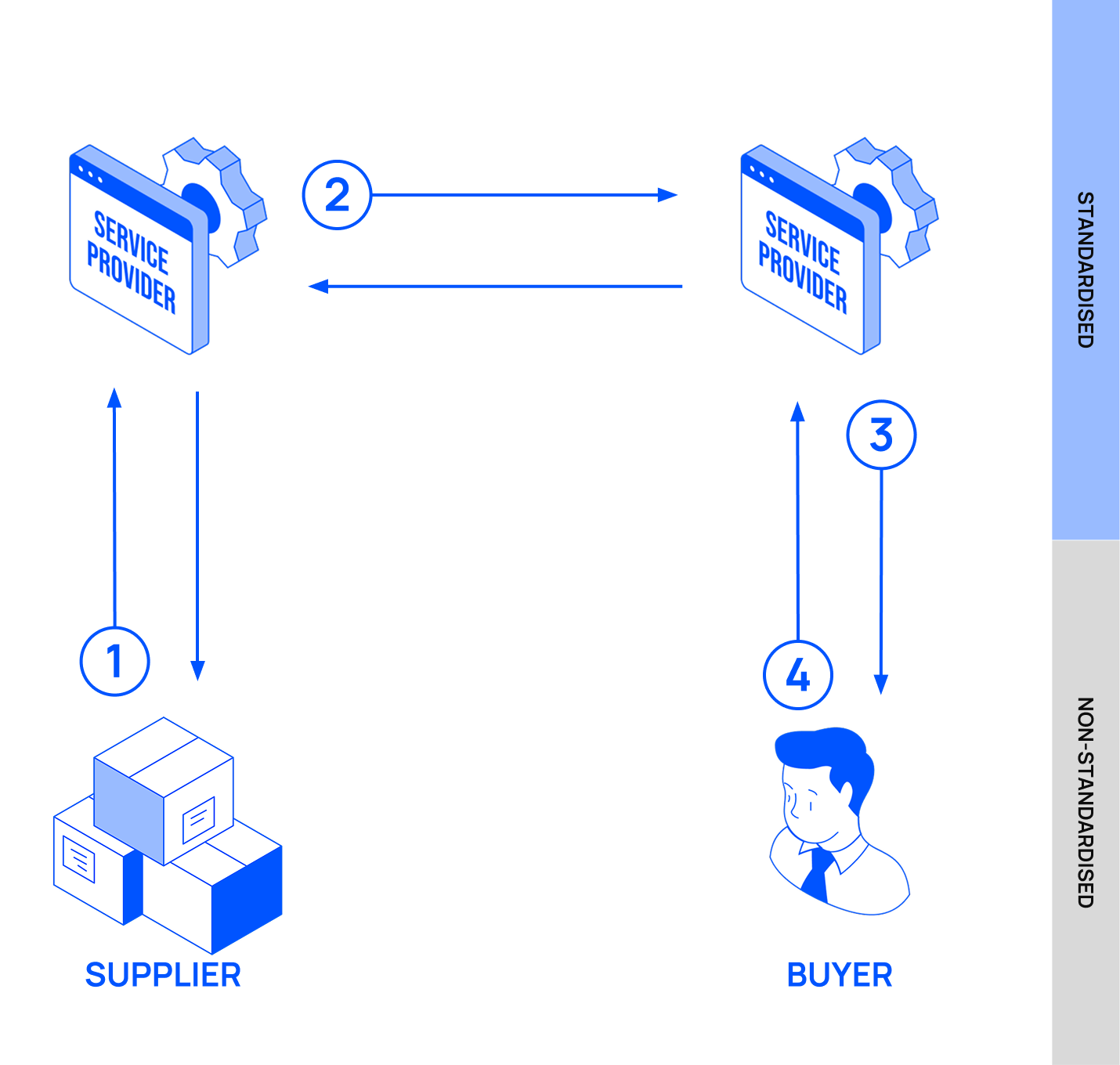
- The supplier transmits invoice data to their service provider, which validates the invoice and maps it into the required format.
- The supplier's service provider sends the invoice to the buyer's service provider.
- The buyer's service provider maps the invoice into a format that the buyer's system can receive.
- The buyer can send an acknowledgment back to the supplier via their service provider.
Continuous transaction controls
These models build government oversight directly into the invoice flow. Invoices are sent to or validated by tax authorities in real time or near real time. This enables governments to have immediate visibility into transactions.
Centralised exchange
In the centralised exchange model, all e-invoices are routed through a single government platform that receives, processes, and, often, forwards invoices.
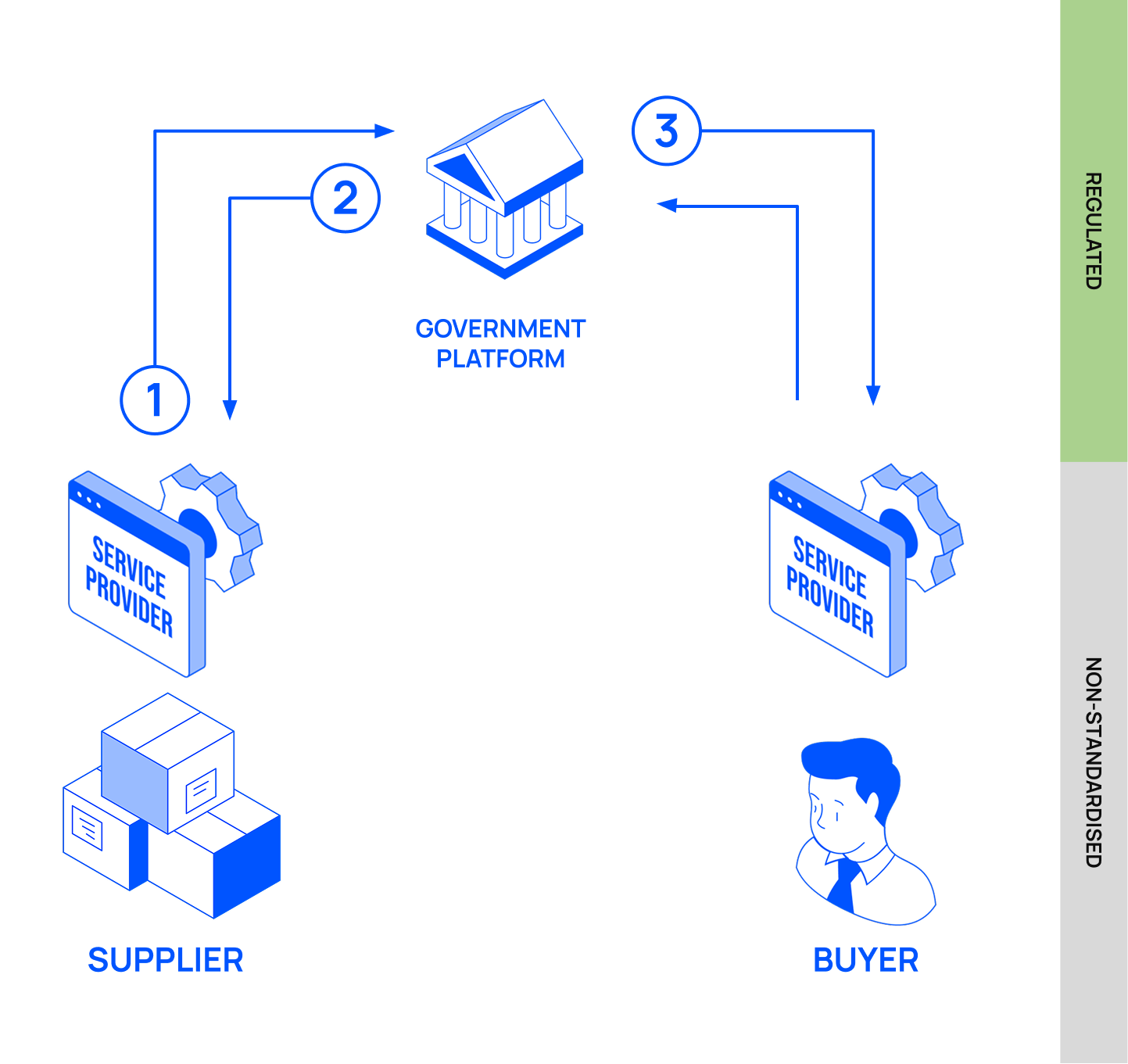
- The supplier transmits invoice data to their service provider, which validates the invoice, maps it into the required format, and submits it to the government platform.
- The platform validates the invoice, confirms its approval by sending an acknowledgment to the supplier, and makes the data available to the tax authority.
- The platform either forwards the invoice to the buyer or makes it available for the buyer to retrieve.
Clearance
The clearance model is like the centralised exchange model, but the tax authority doesn't forward the invoice to the buyer. Instead, the tax authority returns the invoice with clearance details via a unique identifier to show the invoice is approved. The supplier or their service provider can then forward the invoice to the buyer.
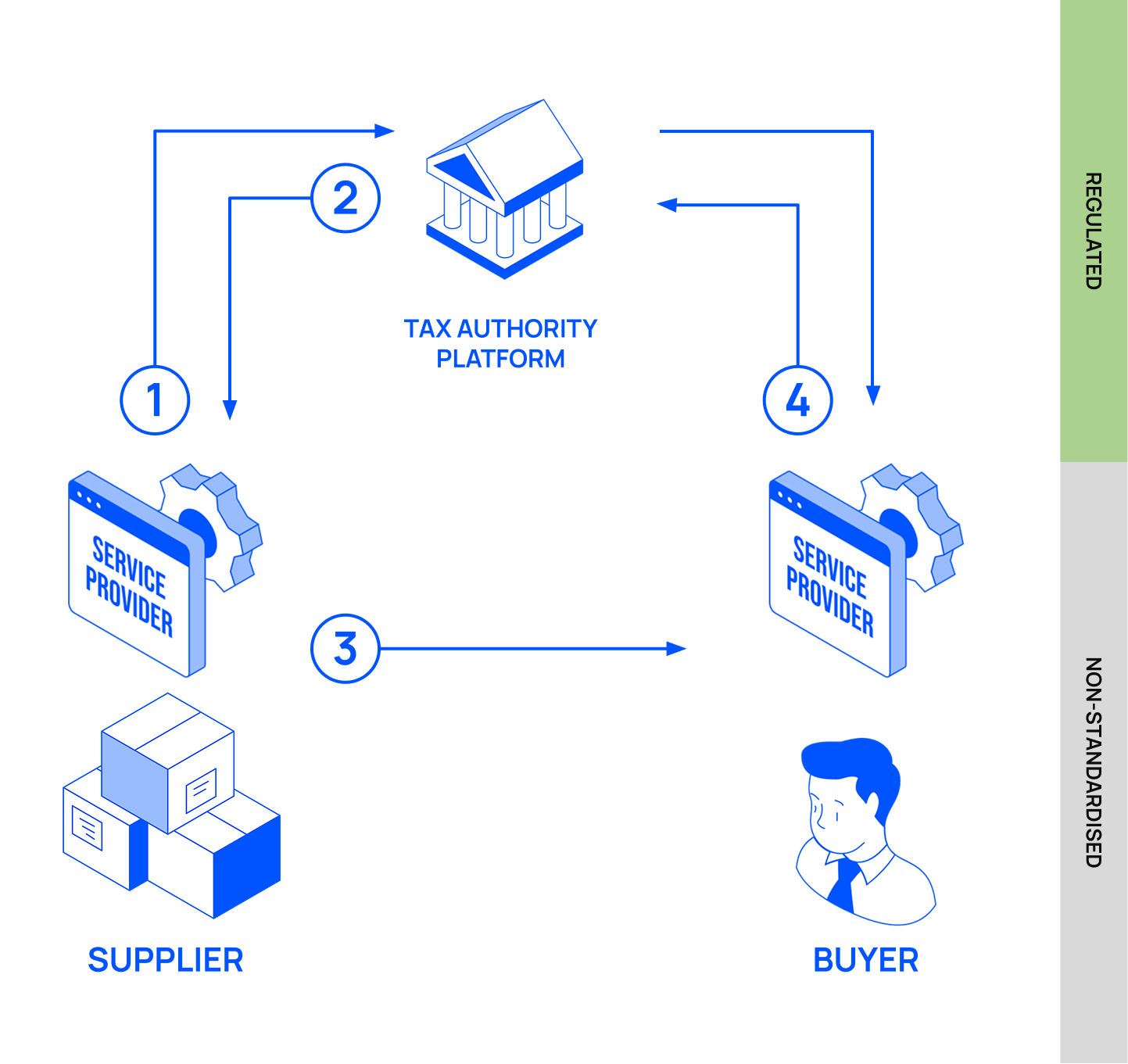
- The supplier transmits invoice data to their service provider, which validates the invoice, maps it into the required format, and submits it to the tax authority platform.
- The platform validates the invoice and provides clearance details via a unique identifier, such as an ID or QR code. The unique identifier is sent back to the supplier via their service provider, enabling the legal issuance of the invoice.
- The supplier can forward the invoice directly to the buyer.
- In some cases, the invoice is made available on the tax authority platform for the buyer to retrieve.
Real-time reporting
In the real-time reporting (RTR) model, businesses are required to report invoice data to the tax authority immediately after issuing it. The invoice itself is still sent directly from the supplier to the buyer. Unlike clearance models, the government doesn't need to approve the invoice before it is shared with the buyer.
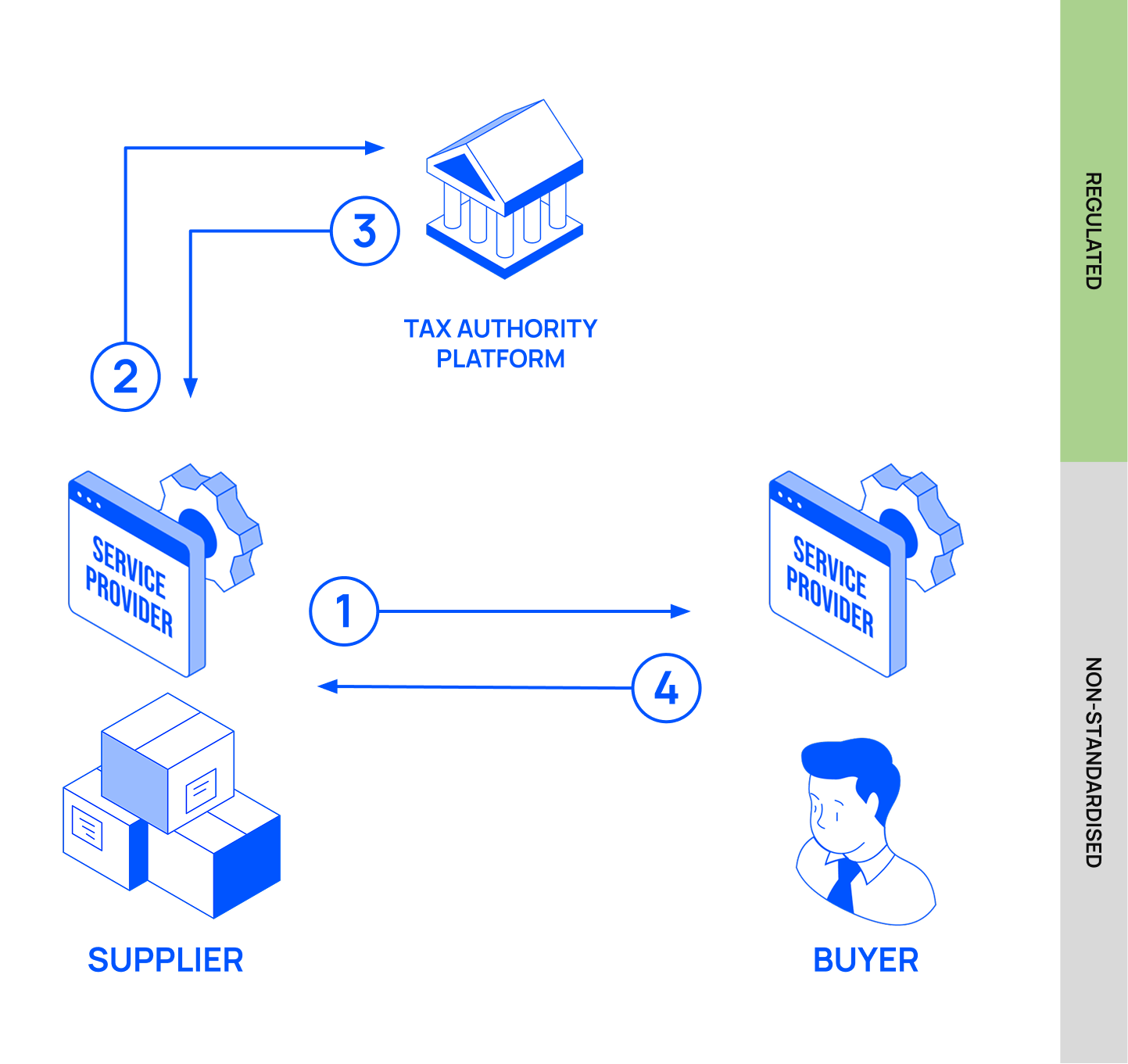
- The supplier transmits invoice data to their service provider, which validates the invoice, maps it into the required format, and sends the invoice to the buyer's service provider.
- At the same time, a copy of the invoice or specific data fields are sent to the tax authority via the supplier’s service provider.
- The tax authority receives this data in near real time for monitoring and compliance and sends back an acknowledgement to the supplier.
- The buyer processes the invoice as usual, independent of the tax authority.
Decentralised CTC and exchange (DCTCE)
Some countries use a hybrid model, known as decentralised CTC and exchange (DCTCE), which combines real-time tax reporting with a decentralised exchange of e-invoices. This process is managed by certified service providers that act on behalf of the tax authority instead of a single government platform.
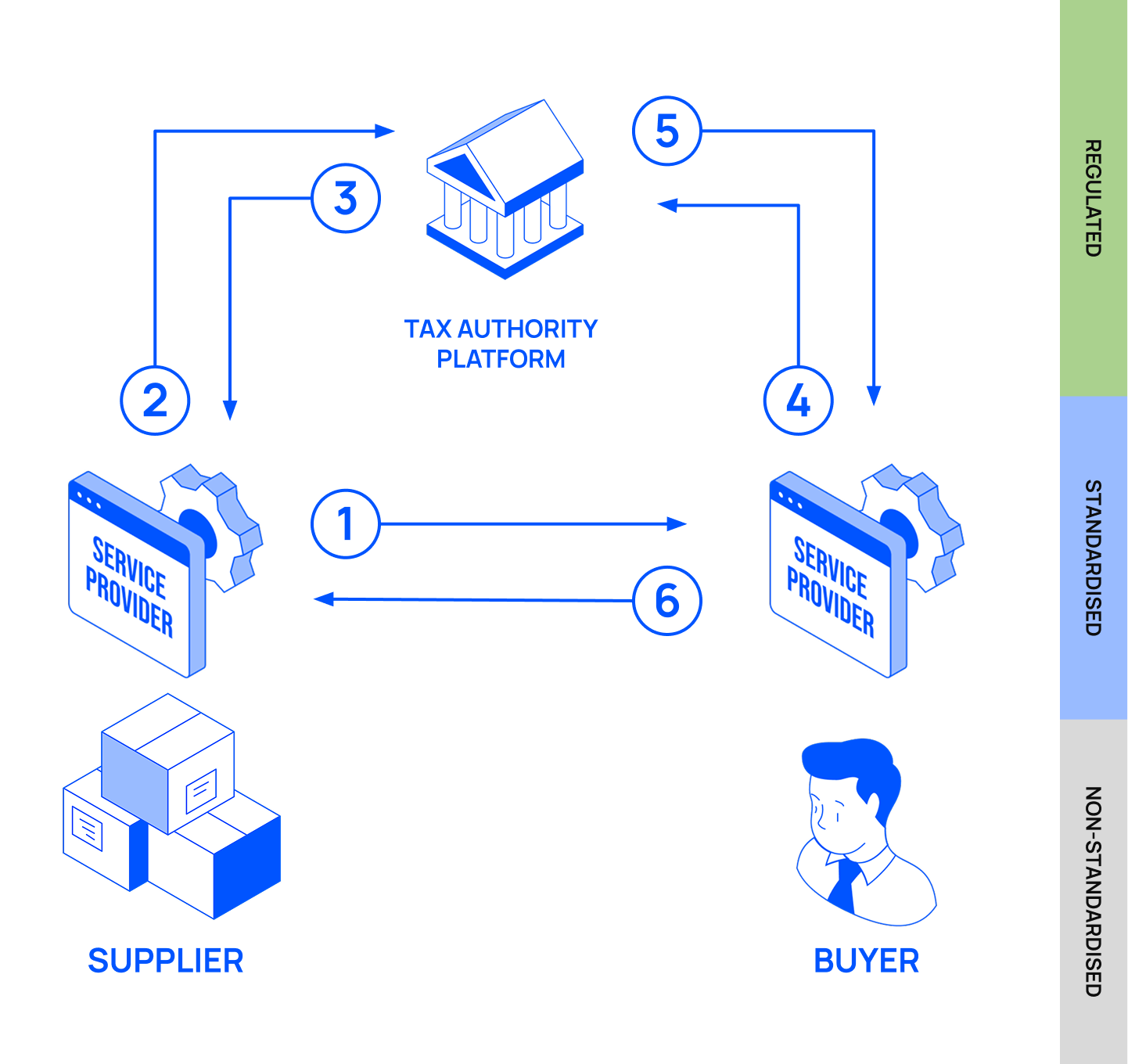
- The supplier transmits invoice data to their service provider, which validates the invoice, maps it into the required format, and sends the invoice to the buyer's service provider.
- The supplier’s service provider also submits it to the tax authority platform.
- The tax authority receives this data in near real time for monitoring and compliance and sends back an acknowledgement to the supplier.
- The buyer checks, declares, or updates the invoice status, depending on country-specific rules.
- The tax authority receives this data in near real time for monitoring and compliance and sends back an acknowledgement to the buyer.
- The buyer can send an acknowledgment back to the supplier via their service provider.
Updated 9 days ago